
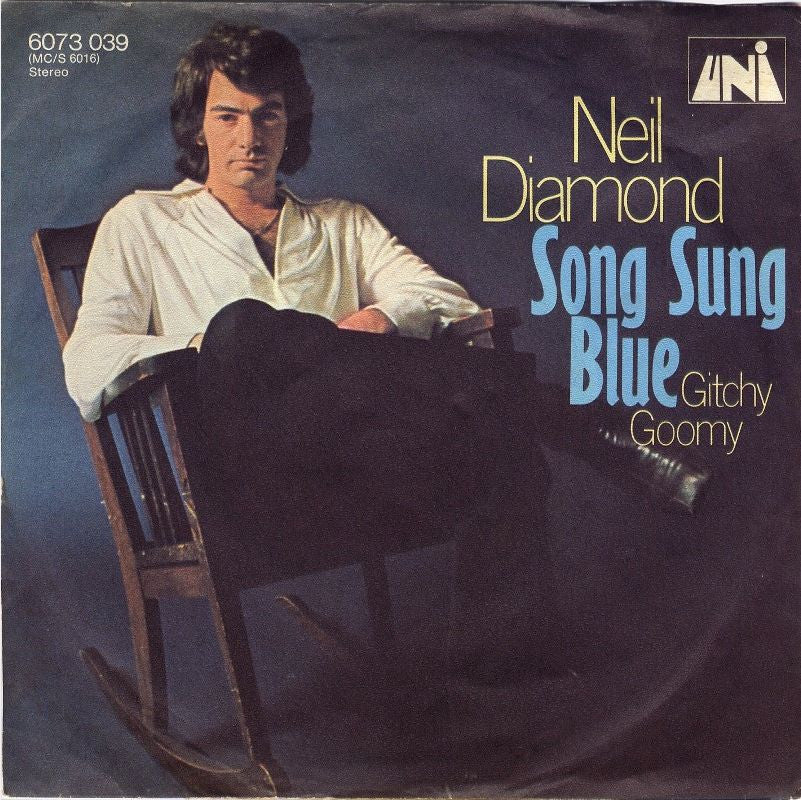
Finding solace in shared melancholy, a musical catharsis for the soul.
Oh, the early 1970s! The world seemed to be sighing a collective, complicated sigh after the tumultuous ’60s, and into that moment of wistful reflection stepped Neil Diamond with his signature track, “Song Sung Blue.” This wasn’t just a pop hit; it was a warm, familiar blanket of sound that perfectly encapsulated the era’s gentle melancholy.
Released in May 1972 on the Uni label as the lead single from his eighth studio album, Moods, “Song Sung Blue” quickly became a touchstone. For American audiences, it soared right to the top, hitting Number 1 on the U.S. Billboard Hot 100 and also topping the U.S. Billboard Adult Contemporary chart for a remarkable seven weeks. It marked Diamond’s second solo chart-topper in the States, following “Cracklin’ Rosie.” Across the pond, it was a solid hit, peaking at Number 14 on the UK Singles Chart, and its impact was even stronger in places like New Zealand, where it reached Number 1. It was a massive international success, cementing Neil Diamond’s status as a powerhouse balladeer who spoke to the everyday person’s heart.
The Genesis of a Classic Tune
The remarkable story behind the song is a delightful marriage of high art and honest pop craftsmanship. Neil Diamond, a masterful songwriter known for his unique blend of rock energy and sophisticated arrangement, revealed that the very melody for “Song Sung Blue” was inspired by a piece of classical music: the serene and beautiful second movement of Wolfgang Amadeus Mozart’s Piano Concerto No. 21. It’s a fascinating detail, how a 20th-century pop anthem owes its DNA to an 18th-century Austrian master. This classical foundation gave the song a timeless quality, an understated elegance that elevated it above typical radio fare.
In his own words, Diamond described the song as a “very basic message, unadorned.” It’s an unusual song about sadness because it sounds so incredibly happy. The simple, lilting acoustic guitar, the gently sweeping strings arranged by Lee Holdridge, and the warm, embracing backing vocals create a joyful, almost celebratory atmosphere. But the lyric is what resonates, suggesting that the best way to handle the “blues” is not to suppress them, but to sing them out loud: “Song sung blue, everybody knows one.”
Meaning: A Universal Hymn for the Heartbreak
The genius of “Song Sung Blue” lies in its universality. It’s a song about shared woe, an acknowledgement that everyone has a low point, a heartache, or a personal “blue” they carry. The narrator isn’t trying to fix the pain with empty platitudes; he’s suggesting a form of musical therapy. By singing a sad song, by giving voice to the sadness, one ironically finds comfort and release—“And before you know it, get to feeling good / You simply got no choice.” It suggests that acknowledging the dark is the first step toward finding the light.
For those of us who came of age during that era, the song evokes memories of slow summer evenings, driving with the radio on, and feeling a shared connection to the world’s quiet sorrows and persistent hopes. It was a beautiful invitation to weep, only to find you were smiling by the final chord. It was nominated for two Grammy Awards in 1973—Record of the Year and Song of the Year—a testament to its cultural significance. More than half a century later, when Neil Diamond steps onto a stage and strikes that simple opening chord, the entire audience becomes a choir, a mass of people singing their “blue” away.