
“Love Me Tender”: A Timeless Embrace of Devotion and Fragility
Ah, Elvis Presley. The name itself conjures up a lifetime of memories, doesn’t it? A bygone era of sock hops and drive-ins, of shy smiles and burgeoning romance. And among the myriad of tunes that poured from his golden throat, few resonate with the quiet, tender power of “Love Me Tender.”
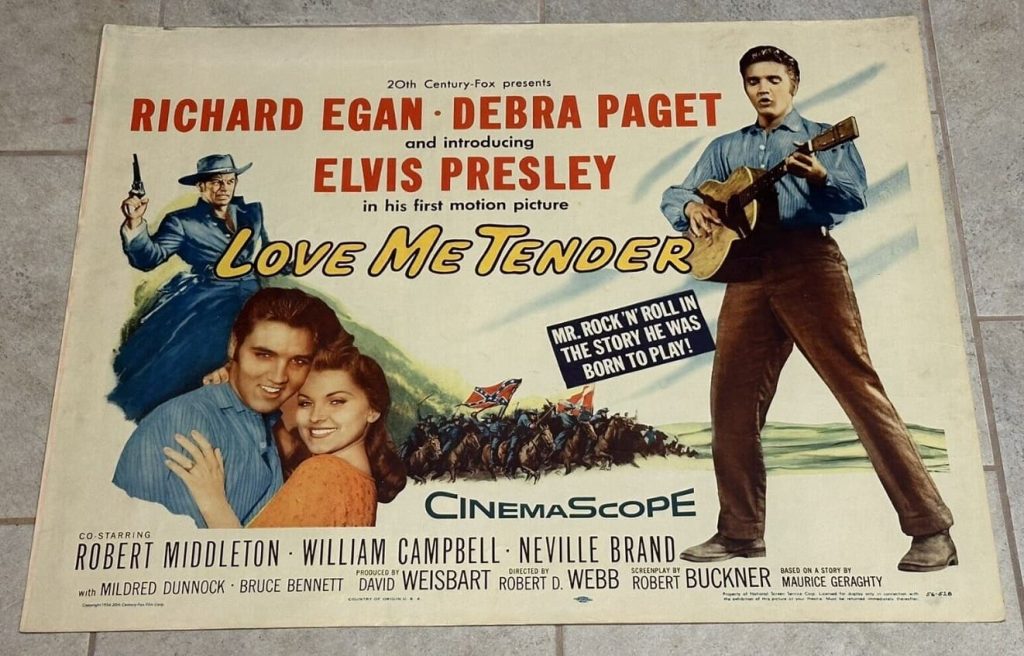
When this ballad first graced the airwaves, it wasn’t just a song; it was a phenomenon, arriving hot on the heels of Elvis’s meteoric rise. Released as a single on September 14, 1956, and part of the Love Me Tender EP, it quickly ascended to the pinnacle of popular music, spending a remarkable five weeks at No. 1 on the Billboard charts. What’s even more astonishing is that it achieved Gold record status before its official release, thanks to over a million advance orders. Imagine that – a testament to the fervent anticipation surrounding anything Elvis touched in those heady days. This unparalleled success even prompted 20th Century Fox to rename the film it was intended for from The Reno Brothers to Love Me Tender, a shrewd move to capitalize on the song’s immense popularity. It wasn’t just a hit; it was a cultural pivot point, solidifying Elvis’s transition from a “rockabilly wildman” to a multifaceted entertainer capable of captivating audiences with a gentle croon.
The story behind “Love Me Tender” is as fascinating as the song itself, rooted in an older, more somber American past. The melody is an adaptation of “Aura Lee,” a sentimental Civil War ballad published in 1861. Originally composed by George R. Poulton with lyrics by W. W. Fosdick, “Aura Lee” had been a popular tune among soldiers and later in college glee clubs and barbershop quartets. For Elvis’s film debut, the music director Ken Darby took this established melody, which was in the public domain, and penned new lyrics. While the official credit for the lyrics went to “Vera Matson” (Darby’s wife) and Elvis Presley himself, it was primarily Darby’s lyrical craftsmanship that gave the song its poignant depth. Elvis famously received co-songwriting credit due to his publishing deal, which often required artists to concede a percentage of song credit for his recordings. Despite this, Darby himself attested to Elvis’s remarkable musical intuition, noting how Elvis, despite not reading music, had an “ears” and could effortlessly make a song his own with just one listen, adjusting the melody and lyrics to fit his unique style.
The meaning of “Love Me Tender” is beautifully straightforward yet profoundly universal. It’s a tender plea for unconditional, enduring love. The lyrics, with their simple yet evocative phrases like “Love me tender, love me true,” “All my dreams fulfilled,” and “For my darlin’ I love you, and I always will,” speak to a yearning for connection, security, and a love that transcends time. It’s about finding completion and fulfillment in another person, a sense of belonging that roots one’s existence. The repeated emphasis on “tender,” “sweet,” and “true” highlights a desire for a gentle, sincere, and unwavering affection, rather than a fleeting passion. For older readers, this song often stirs memories of first loves, of promises whispered in hushed tones, and the enduring comfort of a lifelong partnership. It’s a reflection of the idealism of youth, carried forward into the wisdom of age, reminding us that the simple act of loving and being loved remains one of life’s most profound joys.
In the film Love Me Tender, Elvis played Clint Reno, the youngest of four brothers in post-Civil War Texas. His character, though not a professional singer, performs the song in a few key scenes, imbuing it with a raw, emotional vulnerability that perfectly complements the film’s narrative of love, loyalty, and tragic conflict. The song becomes a recurring motif, underscoring Clint’s deeply felt emotions, particularly concerning his marriage to Cathy, who was once betrothed to his older brother, Vance. The poignant irony, as some note, is that the song’s earnest sentiments seem to resonate more with the complex love triangle than simply Clint’s solo devotion, especially given the film’s famously somber ending where Elvis’s character tragically dies. The overwhelming fan reaction to this onscreen death led to a unique compromise: a superimposed image of Elvis singing the song over the closing credits, ensuring that the final memory for audiences was one of his iconic voice, rather than his character’s demise. This subtle, almost ghostly, rendition only deepens the song’s melancholic beauty and timeless appeal.
“Love Me Tender” stands as a testament not only to Elvis Presley’s unparalleled vocal artistry but also to the enduring power of a simple, heartfelt ballad. It’s a song that reaches across generations, pulling at the heartstrings with its timeless message of love’s quiet strength and eternal promise. For many of us, it’s not just a song; it’s a cherished echo of a time when melodies were simpler, feelings were clearer, and Elvis was, quite simply, the King.
 Great Songs